From the Kitchen
Fresh Pasta at the Hacienda
Handmade tagliatelle with slow-roasted tomatoes, garlic, and butter—an afternoon of cooking slowly at Hacienda Eterna Primavera.
01 — The Machine
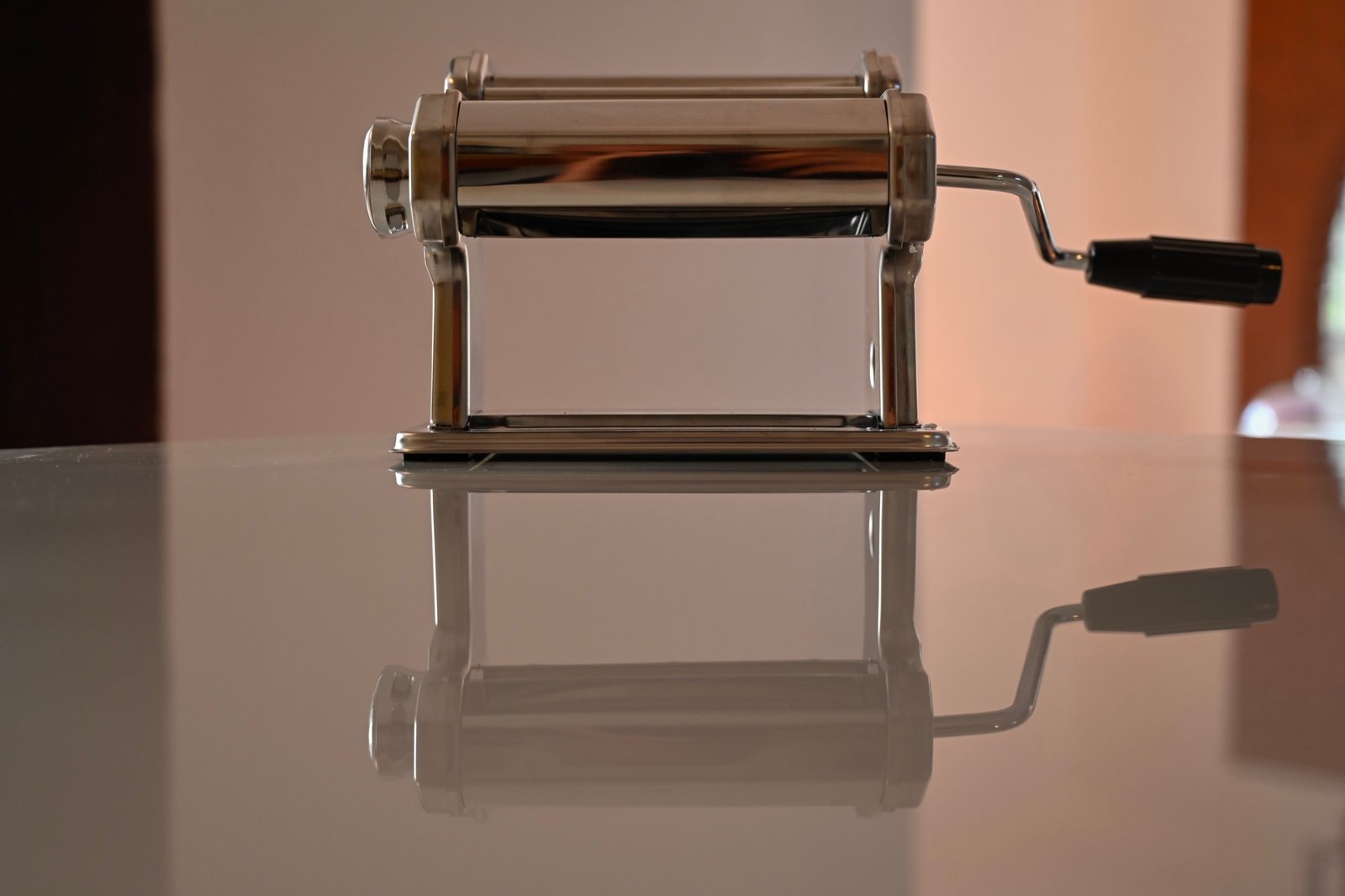
Some recipes start with an ingredient. This one started with a machine. The pasta machine had been sitting in the kitchen at Hacienda Eterna Primavera for weeks—shiny, mechanical, almost too perfect. I bought it because I wanted to make fresh pasta. But owning a pasta machine and actually making homemade pasta are two very different things. Eventually, there was nothing left to do but use it.
There is something wonderfully old-fashioned about a manual pasta machine. No screen. No program. No shortcut. Flour, eggs, your hands, and a crank. That was the beginning of this homemade pasta recipe—not with some complicated idea for dinner, but with the simple decision to make the pasta rather than open a package. And once you do that, dinner already feels different.
For the dough, the formula was simple: 200 grams of all-purpose flour, two large eggs, and a pinch of salt. Nothing more. The ingredients matter, of course. But with fresh pasta, the process matters just as much.
02 — Through
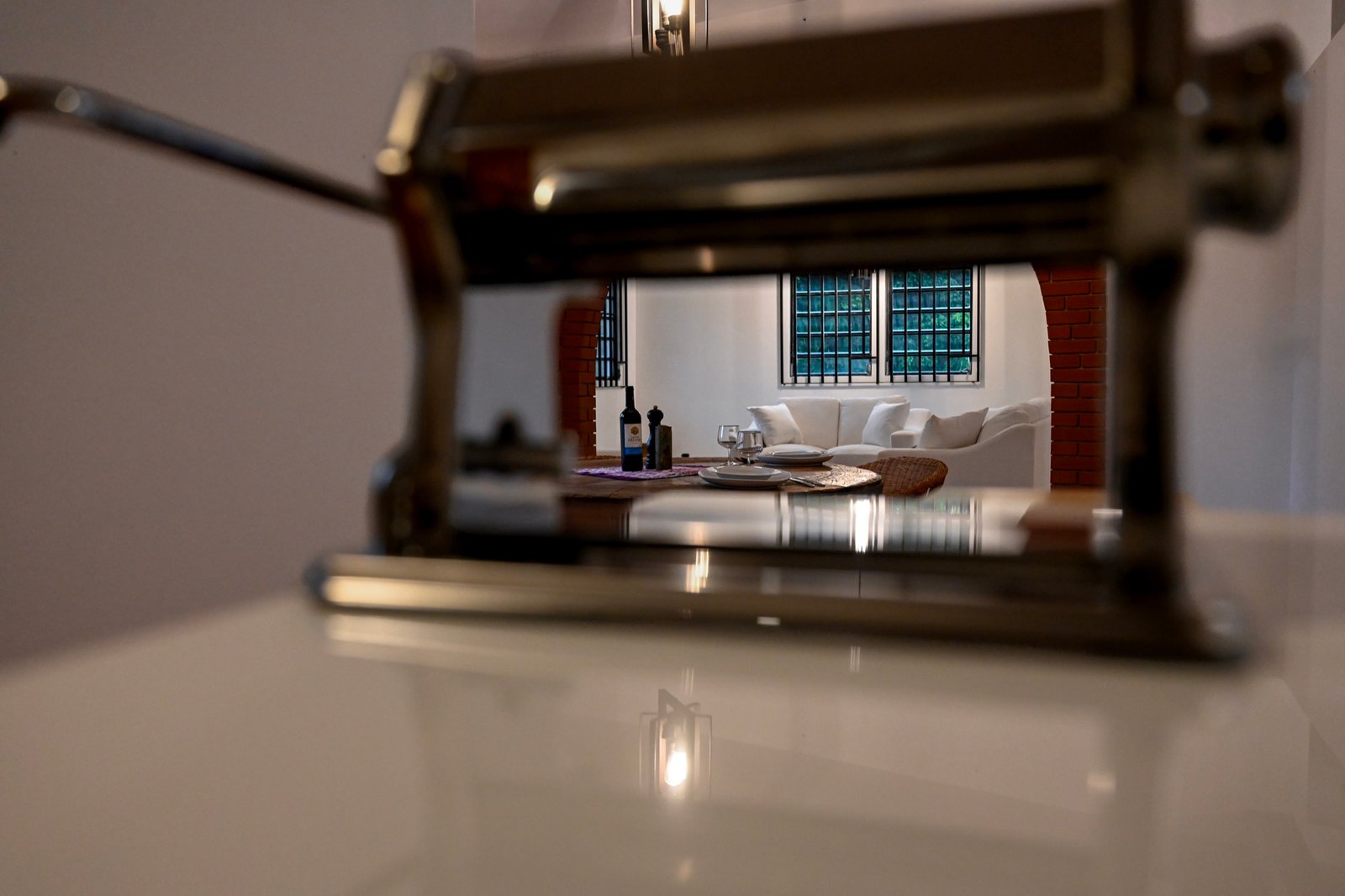
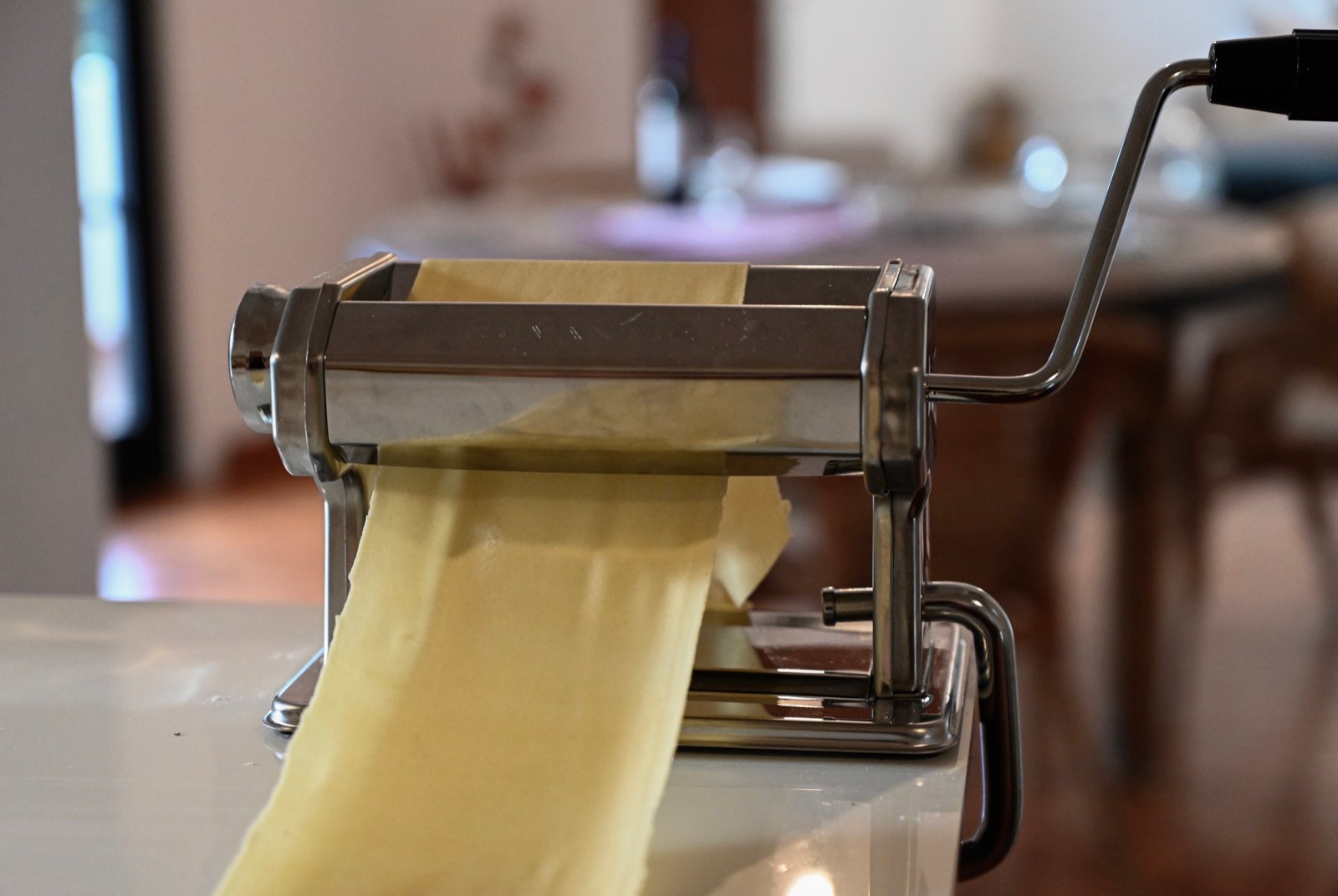
The kitchen at the Hacienda opens into the rest of the house, and looking through the machine you can see exactly where all of this eventually leads. The table. A bottle of wine. Plates waiting. A place to sit down.
That is really what The Lion Chef has always been about. Cooking matters, but the reason we cook matters more. Food creates the excuse to stop doing everything else for a while.
Homemade pasta is particularly good at doing that. You have to slow down. Mix the dough. Knead it. Let it rest. Roll it. Cut it. There is no useful way to rush it.
“Food creates the excuse to stop doing everything else for a while.”
03 — The Light Between Things
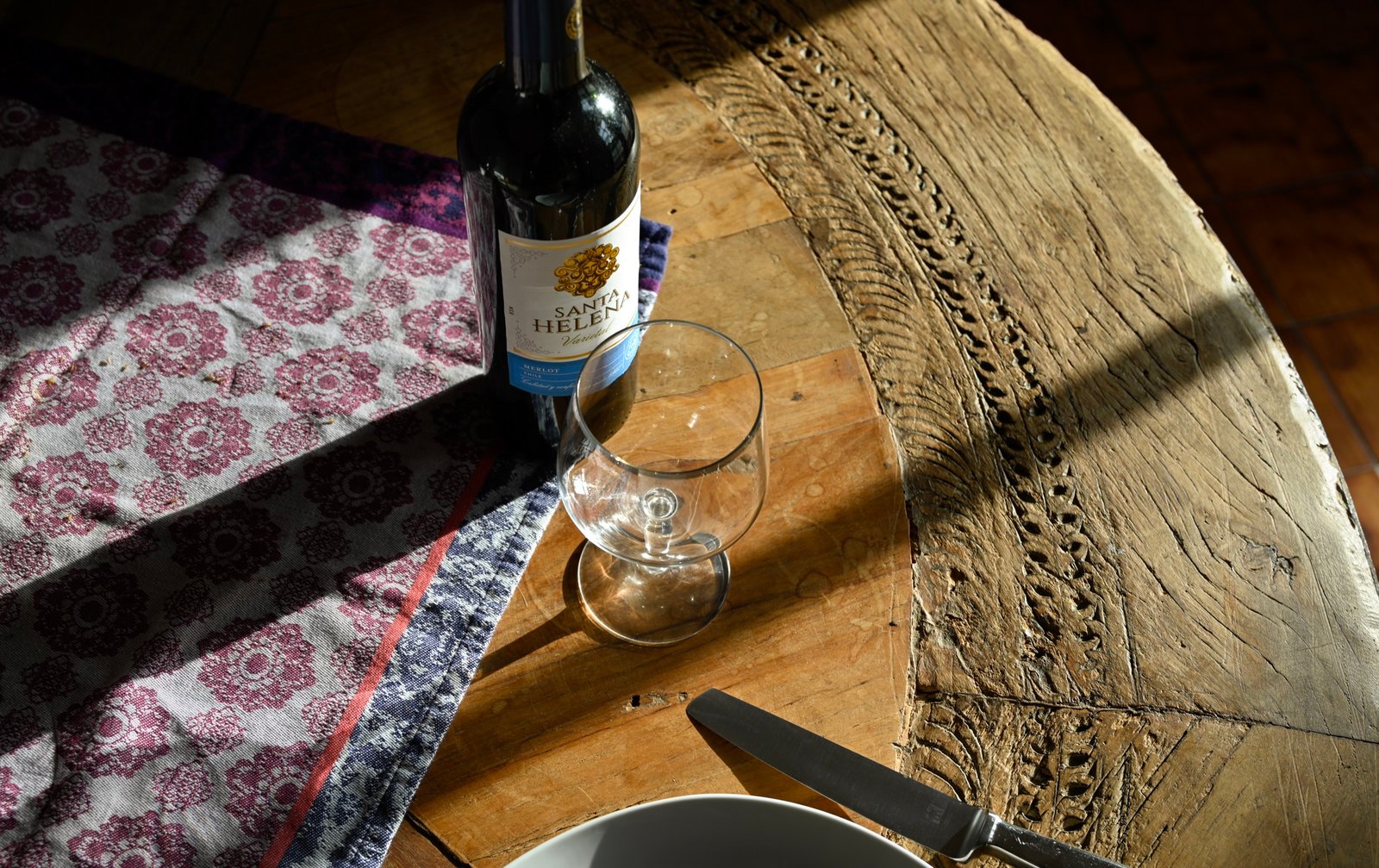
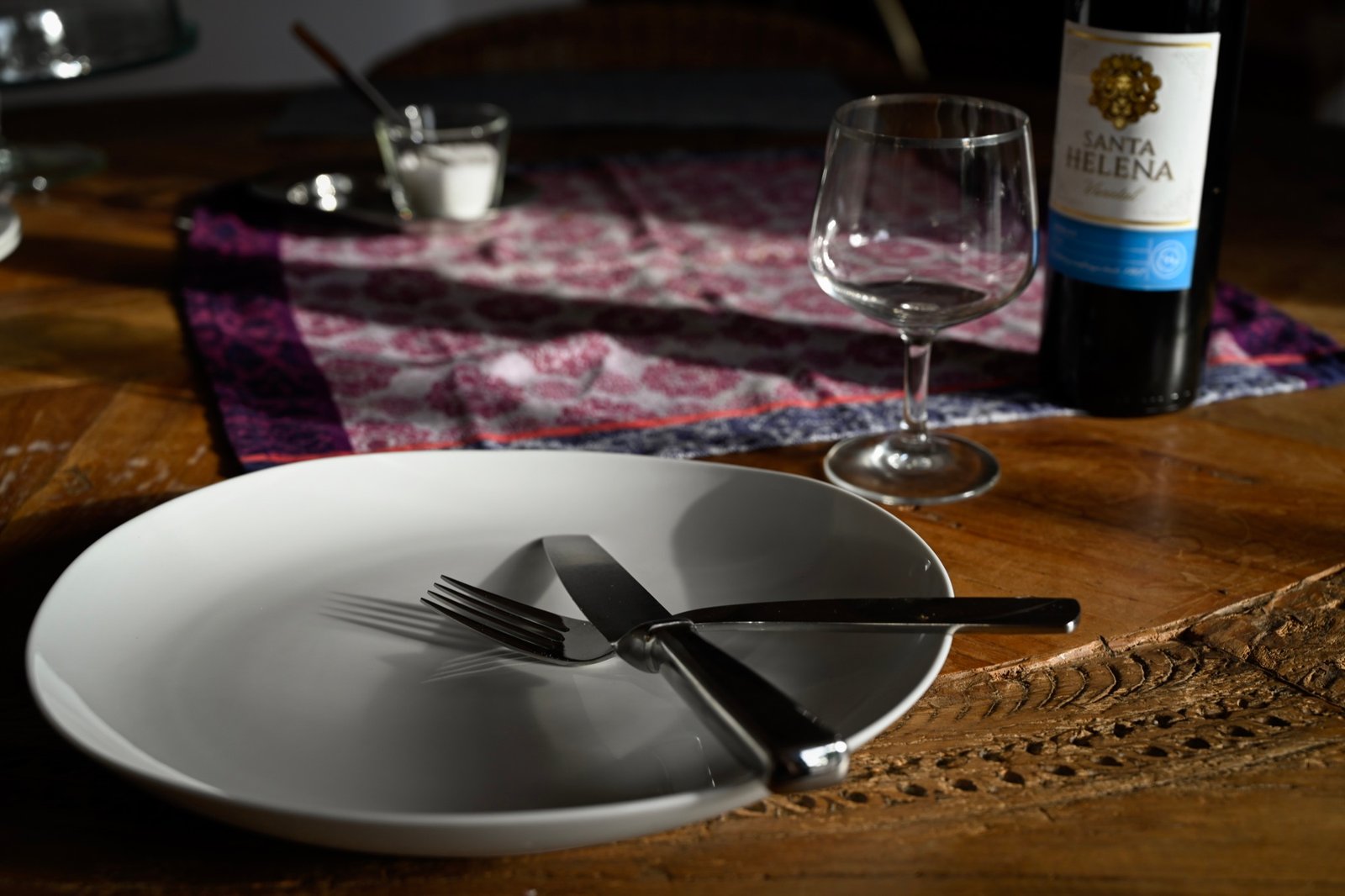
Afternoon light moved across the old wooden table. A bottle of wine. An empty glass. A plate waiting for food. Nothing styled within an inch of its life.
That matters to me more and more. Food photography does not always have to make ordinary things look extraordinary. Sometimes the light is enough. Sometimes the table is enough. Sometimes ordinary is already beautiful.
04 — Before
An empty plate might be my favorite part of cooking. It is pure possibility. At this point, there was no finished dish. Just fresh pasta dough, tomatoes, garlic, butter, and an idea of what they could become.
No heavy sauce. No long list of ingredients. The goal was to leave enough space for the fresh tagliatelle to actually taste like fresh pasta. Because if you go through the trouble of making the pasta yourself, it should not disappear underneath everything else.
05 — Abundance
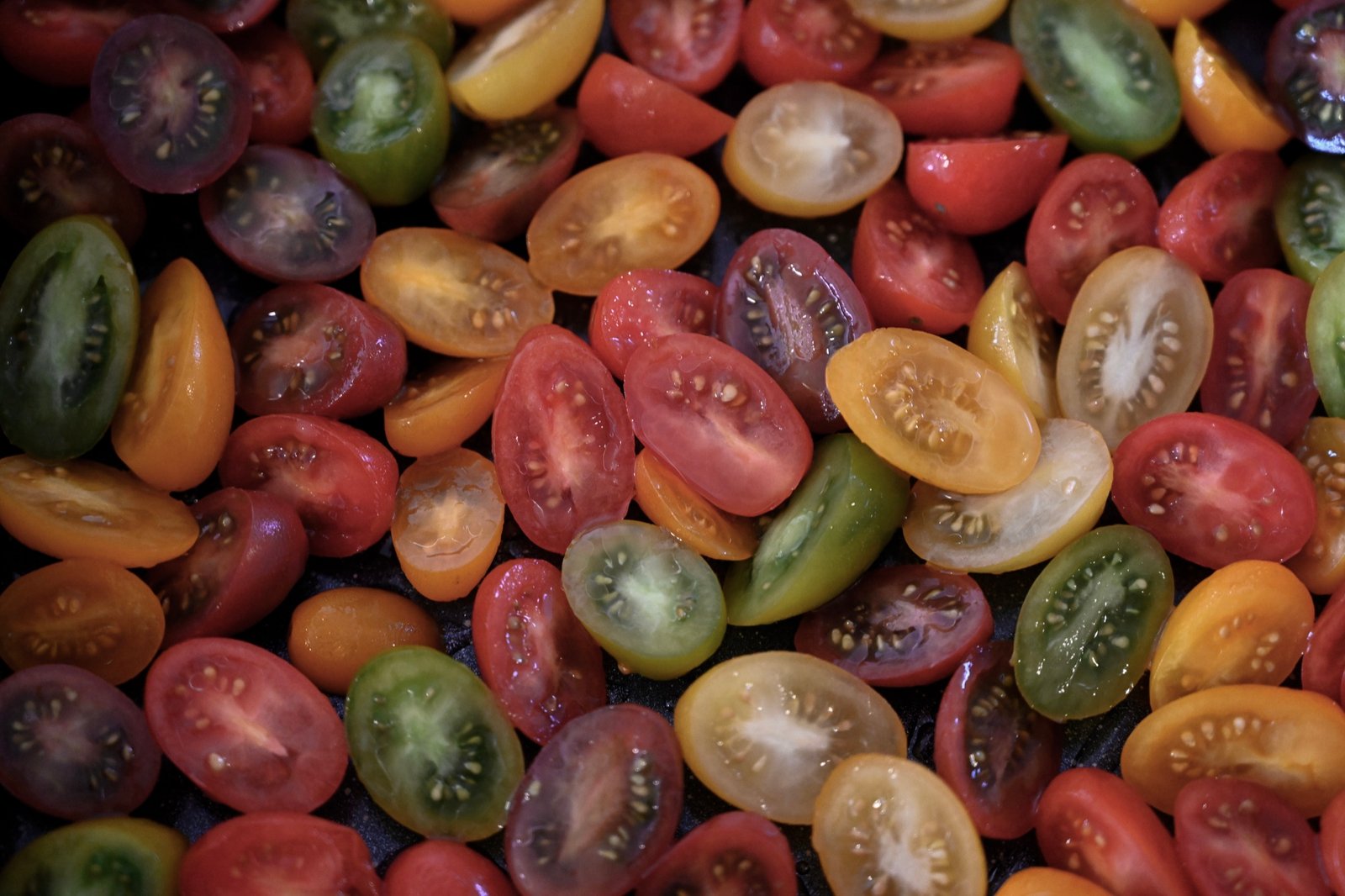
Then came the tomatoes. Red. Yellow. Orange. Green. Purple. Cut open, they already looked almost excessive.
They were simply tossed with olive oil, herbs, salt, and black pepper, then slow-roasted for about 40 minutes at 400°F / 200°C—enough time for them to soften, for their sugars to concentrate, and for some of the edges to begin to caramelize.
The goal was not tomato sauce. The tomatoes needed to remain tomatoes: sweet, acidic, slightly collapsed, still recognizable. The juices left behind on the tray would later become part of the sauce.
06 — The Making
The pasta dough started the old-fashioned way. Flour on the counter. A well in the center. Eggs inside. Slowly, the flour was worked into the eggs until a rough dough formed.
Then came the kneading—about 8 to 10 minutes, until the dough became smooth and elastic. After that, it rested for roughly 30 to 60 minutes. That rest is not optional. It relaxes the dough and makes the next part much easier.
Then the first piece went through the rollers. And again. And again. Each pass made it thinner, smoother, and longer until something that started as a rough ball of dough began to look like pasta. There is something satisfying about that transformation. You can actually see the dough changing in your hands.
07 — Landscape
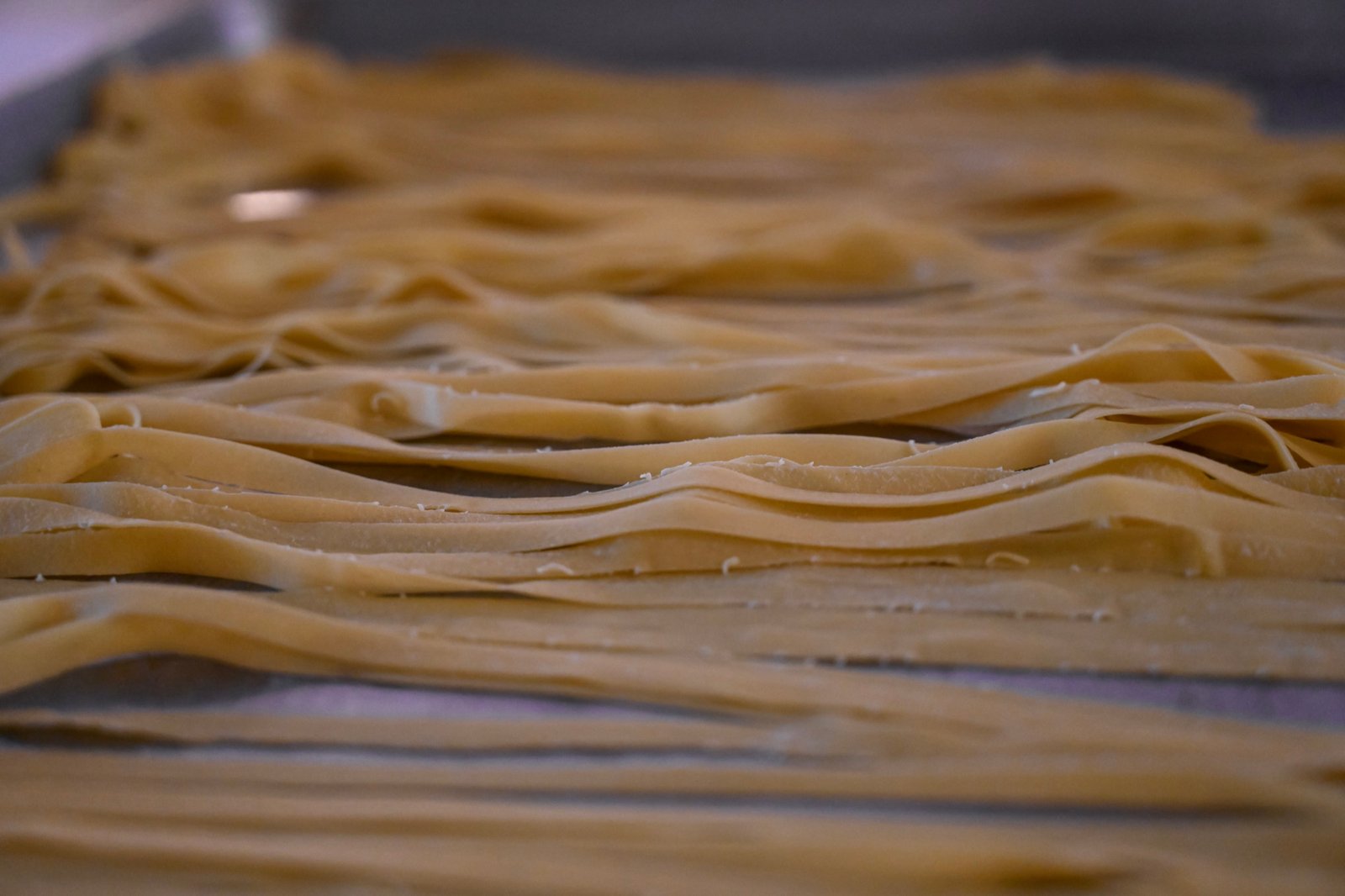
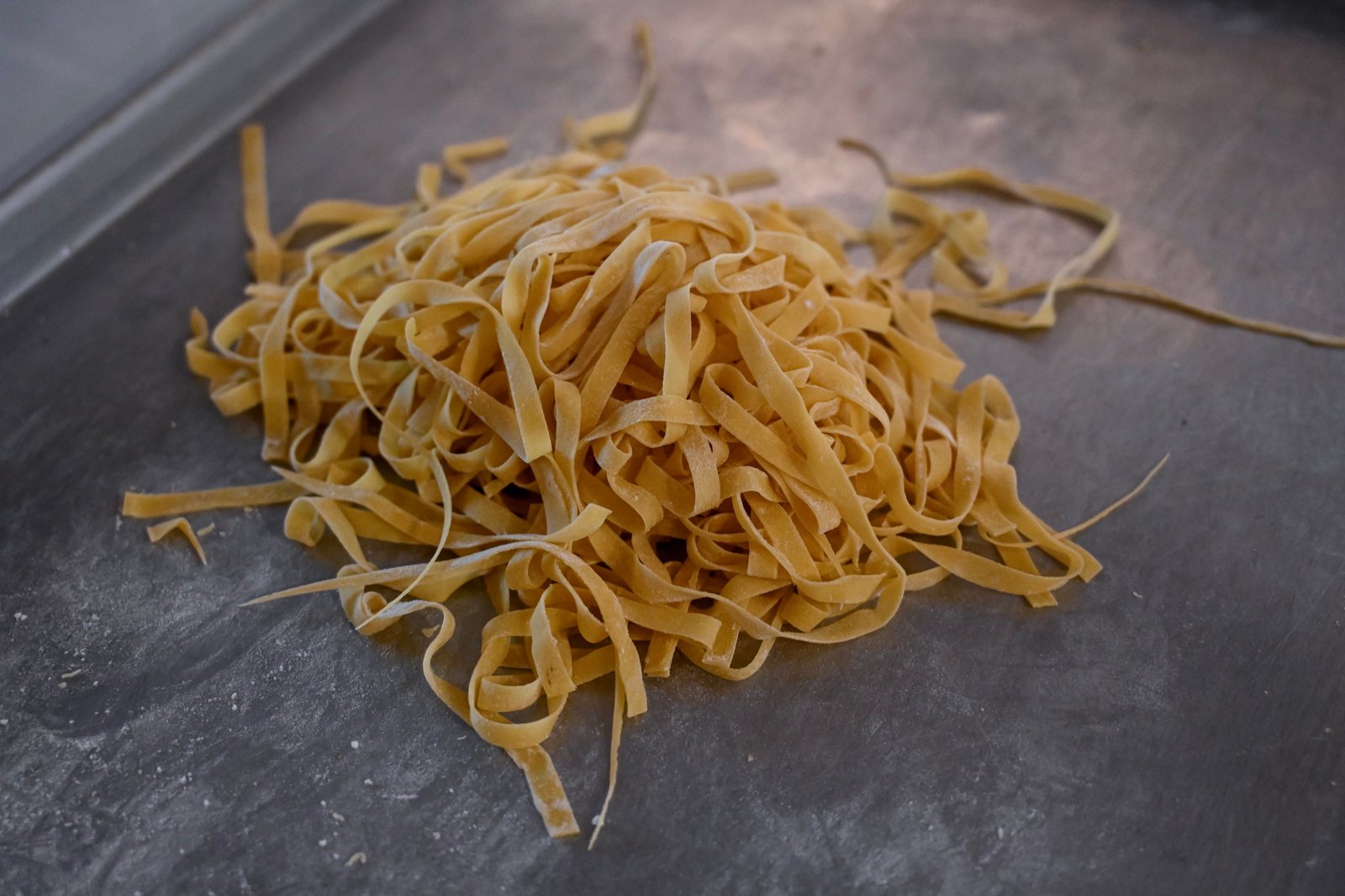
Once the pasta sheets were thin enough, they were cut into wide ribbons. Tagliatelle. Not perfectly straight. Not identical. Definitely handmade. And that is the point.
Fresh pasta does not need industrial precision. Those small differences in width and thickness are evidence that someone actually made dinner.
After cutting, the ribbons were dusted lightly with flour and spread out across the counter. Fresh pasta needs room. If you pile it up too quickly, it starts sticking to itself. That was one of the practical lessons of the day.
08 — The Nest
Then the tagliatelle became loose little nests. This may have been my favorite part. The work was basically finished. Dinner just had not happened yet.
You could see the flour on the pasta. The folds. The uneven edges. The little imperfections. I like that. There is something increasingly appealing about food that still shows the hand that made it.
The Recipe
Homemade tagliatelle with slow-roasted tomatoes, garlic, and butter.
About two generous portions
Fresh pasta
- 200 g all-purpose flour
- 2 large eggs
- Pinch of salt
Roasted tomatoes
- About 2 cups mixed cherry or grape tomatoes, halved
- 1–2 tablespoons olive oil
- Fresh or dried herbs
- Salt
- Black pepper
Sauce
- 2 garlic cloves, finely minced
- 30–60 g cold unsalted butter
- Roasted tomatoes and their juices
- Reserved pasta water
- Salt
- Black pepper
Method
- Toss the tomatoes with olive oil, herbs, salt, and pepper. Roast at 400°F / 200°C for about 40 minutes, until soft, concentrated, and slightly caramelized around the edges.
- Combine the flour, eggs, and salt. Knead until smooth, then rest the dough for 30 to 60 minutes. Roll it gradually thinner through the pasta machine and cut it into tagliatelle.
- Bring a pot of well-salted water to a boil. Cook the fresh pasta for about 1½ to 2½ minutes, depending on its thickness. Reserve some pasta water before draining.
- Gently warm the garlic without browning it. Add the roasted tomatoes and some of their juices. Transfer the pasta directly into the pan just before it is completely cooked, then add a splash of pasta water.
- Add the cold butter a little at a time while tossing gently. The butter, tomato juices, and starchy pasta water will become a glossy, light sauce—just enough to coat the pasta. Adjust with more pasta water if needed, then season with salt and pepper.
09 — The Meal
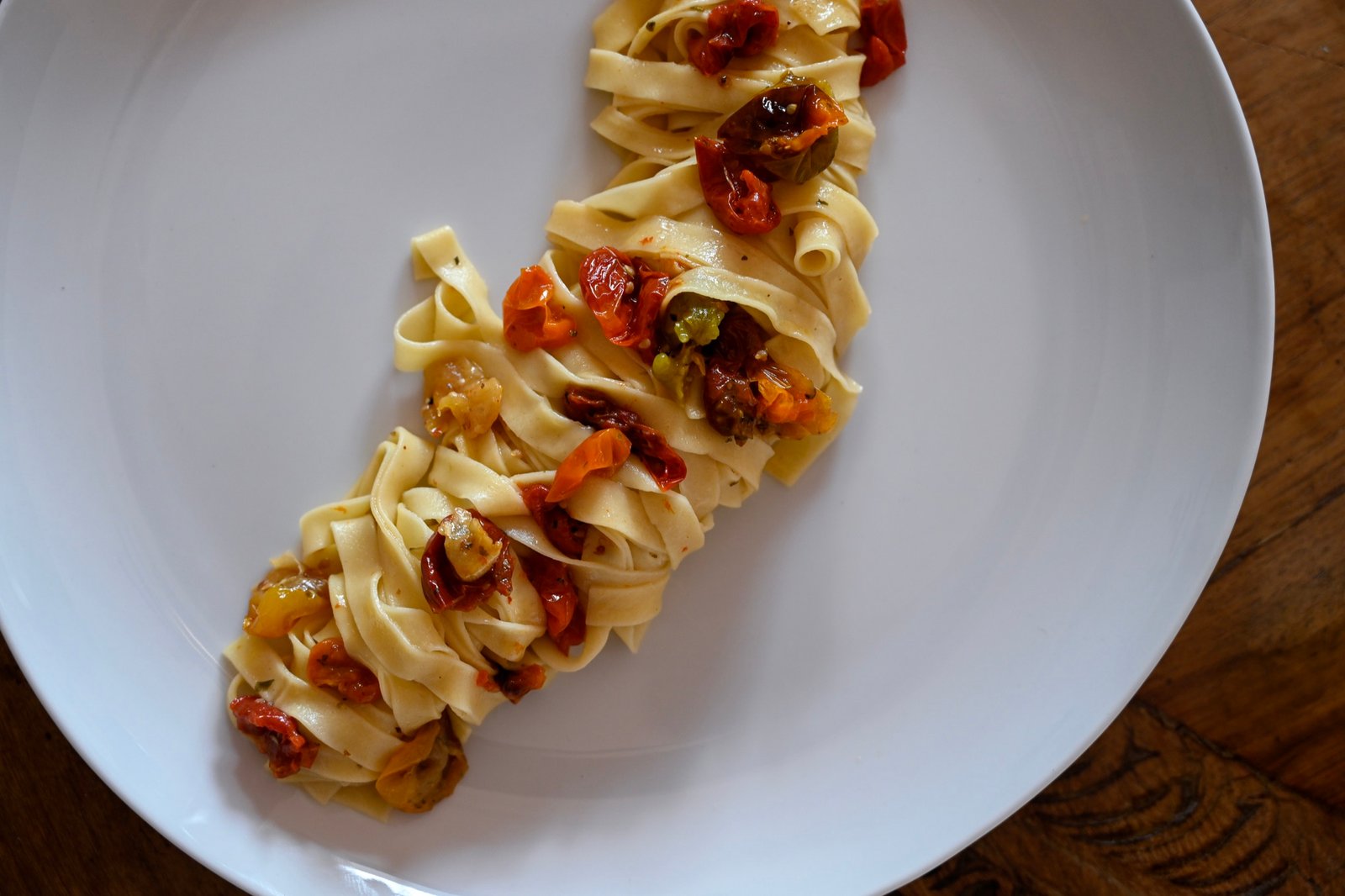
Plating was the hardest part. The first instinct was to make one perfect restaurant-style nest. Instead, the pasta became a line of smaller folds running across a large white plate, with roasted tomatoes tucked between the ribbons. Suddenly the dish had movement. The white space became part of it, and the tomatoes gave just enough color without turning the plate into decoration.
More importantly, it tasted better than I expected. The fresh tagliatelle had that softness and bite that dried pasta does not reproduce. The butter made it silky. The garlic sat underneath everything rather than taking over. And the roasted tomatoes delivered little bursts of acidity and sweetness.
This was one of those dishes where I finished the first bite and thought: I would order that again. That is a pretty good test.
10 — After
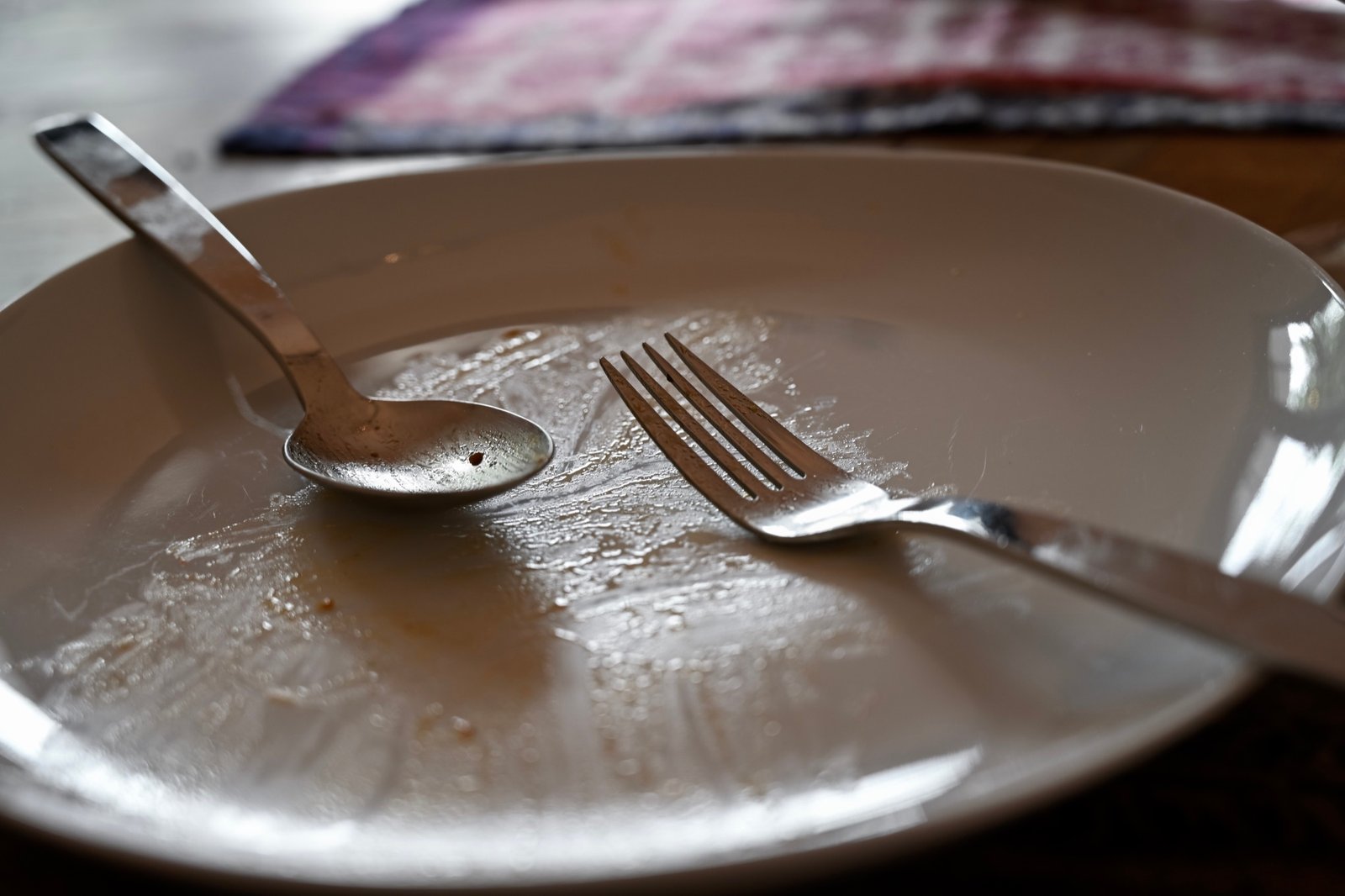
And then there was nothing left. Just a plate, a spoon, a fork, and the traces of what had been there. I like this photograph almost as much as the finished dish, because this is the part food photography rarely shows.
The meal actually happened. The beautiful plate was disturbed. The wine was poured. The pasta disappeared. Which is exactly what food is supposed to do.
We spend a lot of time trying to make ordinary things extraordinary. Maybe we do not need to. We do not make ordinary things extraordinary. We believe they already are. We just do not fuck them up.
Flour. Eggs. Tomatoes. Olive oil. Garlic. Butter. A quiet afternoon at Hacienda Eterna Primavera in the mountains of Puerto Rico. Sometimes that is enough. And sometimes homemade pasta is exactly what the day needed.